
paradoxcase (![[personal profile]](https://www.dreamwidth.org/img/silk/identity/user.png) paradoxcase) wrote in
paradoxcase) wrote in ![[community profile]](https://www.dreamwidth.org/img/silk/identity/community.png) rainbowfic2025-08-01 03:04 pm
rainbowfic2025-08-01 03:04 pm
paradoxcase) wrote in rainbowfic2025-08-01 03:04 pm


Light Black #10 [The Fulcrum]
Name: Peatäro's Story
Story: The Fulcrum
Colors: Light Black #10: Pull
Styles and Supplies: Panorama, Stickers ("A CIA handbook taught torture methods, and stressed the importance of psychological over physical torture. The threat of inflicting pain triggered fears more damaging than the pain itself, because people often underestimated their capacity to withstand pain."), Tempera (these cards with the spread Positive / Negative / What you should do), Novelty Bead (this image, given here)
Word Count: 3655
Rating: T
Warnings: Description of Slavery
Characters: Setsiana, Qhoroali, Peatäro
In-Universe Date: 1912.2.4.2
Summary: Qhoroali observes a substance, and Setsiana talks with Peatäro.
Notes: Hopefully it's not too hard to follow this mobius strip plotline.
A couple weeks passed. Setsiana had gotten to do some more hands-on Guiding practice with Qhoroali — it was indeed very tricky to target an exact time, and she did not think poorly of Cyaru for having failed when bringing her back to 1647. After a number of frustrating sessions of this, Qhoroali suggested taking a break from it.
“I still have those compounds that Cusäfä made for me, and I haven’t gotten a chance to look at them yet,” she said. “Peatäro is actually free to supervise today, and I want to take advantage of that.”
Peatäro did subsequently appear, and Qhoroali unlocked the door in the living room again, but this time Setsiana was invited to come inside, as well. She was given her own pair of the strange spectacles she had seen them wearing so long ago; the sides of them wrapped around and completely enclosed the top half of her face, and it was hard to get used to the feeling. They were clear, as if made of glass, but the material could be easily bent and shaped, and it molded itself to the contours of her face.
The inside of the room was sparse, although Setsiana couldn’t help but notice telltale black marks on the walls. Peatäro opened a large cabinet on the far side of the room and pulled out a table rolling on wheels; also from within the cabinet came some sort of clear dome, which also could not be made of glass, due to the ease and lack of caution with which Peatäro handled it. She placed it on the table, and the four corners of its base snapped smartly onto the four corners of the table. It had a hatch on its top, which Peatäro opened; she held her hand out to Qhoroali, who produced a vial of some sort of nebulous ghostly substance, which Peatäro carefully lowered to the table’s surface inside the dome, and then poured out. She then fastened the hatch at the top of the dome.
The substance spread across the table like a low-hanging fog, sometimes seeming to twist itself into threads and knots, and sometimes reassuming its form as a vague cloud. It was difficult to tell if it was a gas, or a liquid, or somehow both at the same time. “When did you get this one from?” Peatäro asked.
“This was 17th century,” said Qhoroali. “A paper about timelines, so it should have something to do with them, but I don’t know exactly what.”
“What are you planning to do with it today?”
“Today I just wanted to get a look at it. We’ll save the experimentation for later.”
They clustered around the dome and watched it. It would form clear tangles and snarls of threads, and then, as if a wind had blown through, they would dissolve into clouds again. It moved and writhed like a living thing, and in its thread-like state, it seemed like it wanted to climb the walls of the dome towards the hatch, but it never got very far.
“It’s trying to take on a specific form,” Qhoroali said. “I guess it doesn’t have enough space. Can we let it out of containment?”
“No.”
Qhoroali retrieved a wooden pole from inside the cabinet and opened the hatch, inserted it into the dome, and poked at the clouds and threads with it. The substance did not seem to respond to it at all. Eventually, she gave up this plan of attack and simply stood watching it ease in and out of its different shapes. “Maybe we need a bigger container.”
“Is that a request?”
“Maybe. I’ll take a look at the other one I got later, and see if I’m still stuck then.”
They stood watching it for a little bit longer, and then Qhoroali shrugged. “I think that’s probably all we’re going to get, today,” she said. “I didn’t want to bring all of the stuff in here to test it thoroughly yet.”
Peatäro retrieved the vial and opened a valve at the base of the dome, and the substance flowed back into it with the grace of a boat floating down a calm river. The table and dome went back into the cabinet, and they left the room, locking the door behind them. Qhoroali sighed. “I hope the next one is more enlightening.”
They returned to the main room, and Qhoroali disappeared off to her bedroom with the vial. Peatäro went to the main door and made as if to leave, but Setsiana stopped her.
“You said before that you had been kidnapped, too,” she said. “Or— or rescued, maybe. I'm guessing it probably had something to do with the transtimeline slavery.” She hesitated for a moment. “Were you one of the slaves?”
“Oh,” said Peatäro. “Yeah, I was. Qhoroali said I shouldn’t tell you… but I guess it’s fine to tell you about everything now, huh?”
“Yes,” said Setsiana. “I won’t run to the priesthood about you. I can’t. I don’t really have anywhere to go, truth be told. And if you don’t mind it… I’d like to hear your story. I want to know what they are really doing.”
“Sure,” said Peatäro, “I can tell you that story.” She settled down onto a couch, and Setsiana joined her. “I don’t know how it is at other points on the timeline,” she began, “but in our time— that is, about 2200 or so years after the demise of the Cheanya in our timeline, girls would be constantly going missing. Some of them would never be seen again, but others would return, days or weeks or years later, telling stories about being enslaved by ghosts in the underworld, and they would all agree on a lot of the details. Still, no one really believed them — obviously they’d heard those details from another girl and repeated them, right? Anthropologists started calling it a ‘culture-bound syndrome’, you know, some kind of mental illness that for some reason only affects one culture, because this only ever happened here, on this island, of course. They never thought that there might be some real explanation for it, just that it was ‘something about our culture’. We really weren’t any more significant in the wider world than you are here, most everyone who mattered didn’t really notice us, or just thought we were weird.
“But everyone here was afraid this would happen to their daughters. We weren’t allowed out by ourselves, we had to have people with us at all times. It was stifling. My friends and I, other girls, we would get together and plan ways to sneak out, to avoid our parents. None of us believed anything would happen to us, because we weren’t crazy like those other girls, right?
“I was 16 at the time, and I’d snuck off to go to a friend’s house when they took me. My first thought was that they did look like ghosts, or at least looked like people who had put a lot of effort into making themselves seem like ghosts, since they were dressed the way dead bodies are. I thought it was a prank, or like, some mundane kidnappers who were utilizing this mythology for their own ends. But they brought me to a place that was full of more ghosts, and other girls who’d been kidnapped. Some of them spoke really old dialects, and they all thought they must be in the underworld, and frankly I can see why. They taught us small bits of QuCheanya — just enough to learn commands, and some of their names, but not enough to explain who we were, or ask anyone what was going on. They mostly had me doing cleaning; endless, exhausting drudgery, and they didn’t have very good tools for it, either. They never hit or hurt us, at least not as far as I was aware, but… we thought they were ghosts. Even those of us who doubted became less and less sure over time. Our myths about the afterlife come in a very wide variety, there’s a lot of very different ideas about what ghosts are actually capable of. We were all deathly scared of what they might be able to do to us, and none of us were older than 18. All they had to do was raise their voices when we disobeyed.
“At night, they locked us in cells, with a couple of us in each one. Sometimes we tried to plot our escape, but we had no idea where we might be, and a lot of the girls from earlier time periods very firmly believed that we were in the underworld from the beginning and that there was no escape. We did know that some of the ghosts must be Cheanya, because of the red hair, you know, but most of us just figured that that was because there must be some Cheanya ghosts hanging around in the underworld, after all, since they’d all died, obviously.
“Anyway, eventually, after about six or seven months, another person dressed like a ghost came and unlocked our cells in the middle of the night, and lead us outside the temple, and we saw that there was a regular-looking village outside the walls. We met up with some other adults, who weren’t wearing the ghost clothes. Cyaru was there, though I didn’t know him yet — he talked to all of us and figured out what times and timelines we’d come from, with our help. One of the other girls asked him if the village was inhabited by ghosts, too, and I remember that he paused, and then he said ‘yes’. And then a woman who was with him hit him over the head and told him to tell us the truth, and that’s when we got the whole thing explained about the Cheanya, and the priesthood, and the time travel. Some of the other girls refused to believe it, though, they were pretty married to the ghost theory at that point.
“That woman who had hit him… I didn’t recognize her, I’m not sure why, I think there was just too much going on at the time. But that was me, actually. Me from over a decade in the future. That’s what I meant when I said that to you — you engineered your own kidnapping, while I helped rescue myself.
“They returned me, back to my own time and timeline, and I came back to my own family. Only a couple weeks had passed for them, but honestly, I felt like an entirely different person. Now I was part of this ‘crazy’ group of girls who thought they’d been kidnapped by ghosts, you see. Technically I had another explanation, but I don’t think it would have been considered any less crazy, and probably it would have seemed worse. There were groups of us who would come together and talk about that experience, but it was very alienating — no one outside the group believed us at all, and none of the others who’d been kidnapped believed my story about the time travel. And you never really feel safe again, not really. The mythology was that girls were taken while walking outside alone, often at night, but there were plenty of us who’d been taken during the day, or from inside buildings, or from our own homes. The only thing all the instances had in common was that we had all been alone.”
She paused, and was silent for a moment, contemplative. “Can you imagine it?” she continued. “You want to be your own independent person, who can support herself, but now you are terrified that if you are ever alone, you will be stolen away again and returned to misery. It was one of the best things about coming here, actually — I can be alone again. I can live peacefully by myself and not worry about that anymore, because this is the ‘right’ timeline and no one expects me to be here.”
She shook her head. “I’m getting ahead of myself. I pretty much lost all of my friends over this, because none of them knew how to deal with a ‘crazy’ person. By the time I went to university, I’d learned to just not talk about it at all, and I made some new friends there… but I couldn’t really get that close to them. I always knew, you know, in the back of my head, that if they ever found out about what had actually happened to me, they’d abandon me, too. A slightly different kind of alienation.
“I got my degree. I wanted to do tech support— that’s, well, fixing problems with technology, basically. It’s satisfying to solve a problem, and a lot of the time the solution is actually really simple — you just have to unplug something and plug it back in, or give it a whack or two, or reset it, or clean some dust off of it. Technology in my time… it had come along so fast, especially compared to this time period. We’d gained a huge number of new gadgets during my generation, and our parents had no idea how they worked because they hadn’t grown up with them. They weren’t much different than Qhoroali is with the copier, they would hit one small snag with something and have no idea what to do, it would just be permanently broken as far as they were concerned. It feels good to help people and transform their stuff from ‘permanently broken’ to ‘good as new’ in their eyes, and sometimes you could teach them something new, give them the beginnings of a new skill, which was fun, too. Some of them were permanently angry at their gadgets because they didn’t understand them, and that was always unpleasant, but at other times it could be really rewarding.
“I thought the fear of the kidnappers would go away after university. We all knew they targeted mainly younger girls, I figured I would eventually age out of their preferred range and be able to live a normal life. But I didn’t; I kept thinking they would come for me anyway. It wasn’t rational, but I couldn’t stop thinking that. I briefly got together with a boyfriend I didn’t really want at around that time, just so I could avoid being alone more easily, and let me tell you, that was a mistake.”
Cautiously, Setsiana said, “At Cyaru’s village, they said that carrying weapons was enough to scare them away.”
“Yeah,” Peatäro said, “Bladed weapons, since many priestesses don’t recognize guns. Cyaru did actually mention that to us when he rescued us, even before he mentioned the time travel. But the thing is, in my time, no one uses bladed weapons anymore, they’ve been completely outclassed by guns. If you wanted to carry around a long knife, or a dagger, or worse, a short sword for protection, people would think you were insane. And you can’t really find those anywhere, either — all of our sharp knives were tableware. Actual bladed weapons were museum artifacts, or expensive props for anachronists. It was very hard to find something intended for self-defense, let alone find someone willing to teach you how to use it for that purpose.
“Anyway, one day— one day I saw Cyaru again, out of nowhere. He was returning a girl to a house next to where I was living at the time, and I immediately went up to him. I was thinking that he was one of the few people who I knew would believe me about what had happened to me, in the whole world, and he also knew it hadn’t been ghosts, and he probably knew other people who would know those things, too. But he didn’t recognize me. I told him the name of the temple that he’d said we’d been rescued from, way back when I was 16, and he told me he’d never been there. For a moment I started to wonder if he was going to deny the things I’d experienced, too, but then I remembered about the time travel, and realized it must just be that by some fucky happenstance, he just hadn’t been there yet. He agreed that that was most likely what had happened, and I asked if he could take me back with him, to whatever part of time he lived in. I was just thinking that I could maybe be around people who believed me, and maybe not be afraid anymore, and after I explained all that, he did actually agree.
“I didn’t meet Qhoroali for the first time until after I came here. I guess she and Cyaru were… fighting, or something, at the time, I’m not really sure, not my business. And she was making her copies of her research papers longhand, if you can believe it, and it took so much time, and I said, you know, we have a solution to this problem, actually! And we went back to my time with Cyaru and we stole a desktop copy machine and some solar hubs from the place where I was working at the time and I set her up with it. And now I kind of have to stay here, you know, to do the tech support for this copy machine.” She laughed. “I still got to do what I wanted to do with my life, and no one here hates the copy machine, it’s wonderful.
“Cusäfä was also living here at the time, and while everyone else was fascinated by the copy machine, he was interested in the solar hubs. It’s incredible to me — he has amazing technology in his timeline, stuff I could never have dreamed of, but somehow they still don’t have portable solar power. It’s not anything to do with us, here, either — it’s not like the solar hubs were invented by one of us and the ancient Cheanya kingdom just killed that person’s 2000-year-old ancestor in your timeline or anything like that. In my timeline, the solar hubs were invented in T’arse. Which I guess makes sense, they don’t have to deal with short daylight hours in the winter, there.
“Anyway, Cusäfä had his idea of taking one of his miracle machines back to the neolithic. So we went on this kind of insane adventure to get one from his completely cursed timeline, and then we discovered that the electrical connectors on our devices were completely incompatible, and we had to jury-rig up a transtimeline adapter for them.”
“Adapter?” asked Setsiana, feeling a little like the last part of this had been in a foreign language.
“Sorry, right. Basically, in order to connect the solar hub to whatever it’s powering, you have some holes in the solar hub that link up inside it. Then, your other device has a plug with some metal prongs that exactly fit in those holes, and the prongs are connected through a wire in such a way that they deliver the power to the other device. We had come up with the same idea, roughly, in both timelines, but we had designed the plugs and holes completely differently. In my timeline, the prongs look kind of like this—” she held up three of her fingers and contorted them into a specific arrangement— “and in his timeline they look like this.” She moved her fingers into a different arrangement. “So, the plug on his machine doesn’t fit into the solar hubs. So we had to make something that accepts the plug from his device, and maps its prongs onto another set of prongs that fit into the solar hub. Honestly, it was a fascinating problem to solve, maybe one of the most fun things I’ve ever done.
“Three years later, Cyaru invited me to come with him and Liselye when they went to that temple where I’d been imprisoned. I finally got to help free my 16-year-old self, and got to hit Cyaru over the head when he tried to lie to her. I think it was really only at that point that I was able to move on; actually seeing myself, how I’d been eleven years prior, and how different my circumstances had been, how much better things were for me now… it made it hit home that it was really all over and I never had to go back to that life. But I think, sometimes, about the other girls from my timeline that were taken, and if anything ever got better for them, after they got older. Were they ever able to move on? I don’t really have any idea.”
“I see now why Qhoroali thinks we have to destroy all of the timelines, and why it’s not good enough to just free the slaves,” said Setsiana. “But I still don’t know if that’s actually a good idea. What do you think? Do you think there’s any other way we can fix things, and restore those girls’ lives other than just deleting everything and starting over?”
“Oh, I don’t know about any of this time travel stuff,” said Peatäro. “I just work here. Whatever you guys decide is the solution, I’ll help however I can, but I’m not trained in this stuff, so any idea I came up with would probably just be nonsense.”
Setsiana wanted to retort that she was specifically hoping for a non-time-travel solution, but Qhoroali interrupted her by returning from whatever puttering around she’d been doing in her room. “Do you want to set a date for you to do more thorough experiments?” asked Peatäro.
Qhoroali just shook her head. “I’ll go back to that paper and see if I can glean anything more out of it,” she said. “I’m not in a big rush to experience more disappointment.”
“Alright,” Peatäro said, rising to leave. “You know where to find me.” She left the apartment, leaving Setsiana alone with Qhoroali and her own thoughts.
Story: The Fulcrum
Colors: Light Black #10: Pull
Styles and Supplies: Panorama, Stickers ("A CIA handbook taught torture methods, and stressed the importance of psychological over physical torture. The threat of inflicting pain triggered fears more damaging than the pain itself, because people often underestimated their capacity to withstand pain."), Tempera (these cards with the spread Positive / Negative / What you should do), Novelty Bead (this image, given here)
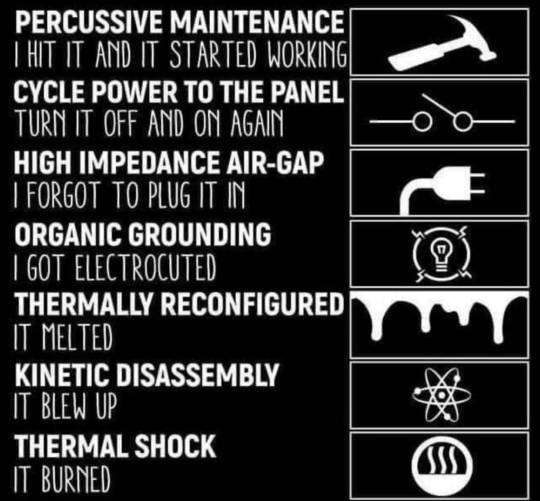
Word Count: 3655
Rating: T
Warnings: Description of Slavery
Characters: Setsiana, Qhoroali, Peatäro
In-Universe Date: 1912.2.4.2
Summary: Qhoroali observes a substance, and Setsiana talks with Peatäro.
Notes: Hopefully it's not too hard to follow this mobius strip plotline.
A couple weeks passed. Setsiana had gotten to do some more hands-on Guiding practice with Qhoroali — it was indeed very tricky to target an exact time, and she did not think poorly of Cyaru for having failed when bringing her back to 1647. After a number of frustrating sessions of this, Qhoroali suggested taking a break from it.
“I still have those compounds that Cusäfä made for me, and I haven’t gotten a chance to look at them yet,” she said. “Peatäro is actually free to supervise today, and I want to take advantage of that.”
Peatäro did subsequently appear, and Qhoroali unlocked the door in the living room again, but this time Setsiana was invited to come inside, as well. She was given her own pair of the strange spectacles she had seen them wearing so long ago; the sides of them wrapped around and completely enclosed the top half of her face, and it was hard to get used to the feeling. They were clear, as if made of glass, but the material could be easily bent and shaped, and it molded itself to the contours of her face.
The inside of the room was sparse, although Setsiana couldn’t help but notice telltale black marks on the walls. Peatäro opened a large cabinet on the far side of the room and pulled out a table rolling on wheels; also from within the cabinet came some sort of clear dome, which also could not be made of glass, due to the ease and lack of caution with which Peatäro handled it. She placed it on the table, and the four corners of its base snapped smartly onto the four corners of the table. It had a hatch on its top, which Peatäro opened; she held her hand out to Qhoroali, who produced a vial of some sort of nebulous ghostly substance, which Peatäro carefully lowered to the table’s surface inside the dome, and then poured out. She then fastened the hatch at the top of the dome.
The substance spread across the table like a low-hanging fog, sometimes seeming to twist itself into threads and knots, and sometimes reassuming its form as a vague cloud. It was difficult to tell if it was a gas, or a liquid, or somehow both at the same time. “When did you get this one from?” Peatäro asked.
“This was 17th century,” said Qhoroali. “A paper about timelines, so it should have something to do with them, but I don’t know exactly what.”
“What are you planning to do with it today?”
“Today I just wanted to get a look at it. We’ll save the experimentation for later.”
They clustered around the dome and watched it. It would form clear tangles and snarls of threads, and then, as if a wind had blown through, they would dissolve into clouds again. It moved and writhed like a living thing, and in its thread-like state, it seemed like it wanted to climb the walls of the dome towards the hatch, but it never got very far.
“It’s trying to take on a specific form,” Qhoroali said. “I guess it doesn’t have enough space. Can we let it out of containment?”
“No.”
Qhoroali retrieved a wooden pole from inside the cabinet and opened the hatch, inserted it into the dome, and poked at the clouds and threads with it. The substance did not seem to respond to it at all. Eventually, she gave up this plan of attack and simply stood watching it ease in and out of its different shapes. “Maybe we need a bigger container.”
“Is that a request?”
“Maybe. I’ll take a look at the other one I got later, and see if I’m still stuck then.”
They stood watching it for a little bit longer, and then Qhoroali shrugged. “I think that’s probably all we’re going to get, today,” she said. “I didn’t want to bring all of the stuff in here to test it thoroughly yet.”
Peatäro retrieved the vial and opened a valve at the base of the dome, and the substance flowed back into it with the grace of a boat floating down a calm river. The table and dome went back into the cabinet, and they left the room, locking the door behind them. Qhoroali sighed. “I hope the next one is more enlightening.”
They returned to the main room, and Qhoroali disappeared off to her bedroom with the vial. Peatäro went to the main door and made as if to leave, but Setsiana stopped her.
“You said before that you had been kidnapped, too,” she said. “Or— or rescued, maybe. I'm guessing it probably had something to do with the transtimeline slavery.” She hesitated for a moment. “Were you one of the slaves?”
“Oh,” said Peatäro. “Yeah, I was. Qhoroali said I shouldn’t tell you… but I guess it’s fine to tell you about everything now, huh?”
“Yes,” said Setsiana. “I won’t run to the priesthood about you. I can’t. I don’t really have anywhere to go, truth be told. And if you don’t mind it… I’d like to hear your story. I want to know what they are really doing.”
“Sure,” said Peatäro, “I can tell you that story.” She settled down onto a couch, and Setsiana joined her. “I don’t know how it is at other points on the timeline,” she began, “but in our time— that is, about 2200 or so years after the demise of the Cheanya in our timeline, girls would be constantly going missing. Some of them would never be seen again, but others would return, days or weeks or years later, telling stories about being enslaved by ghosts in the underworld, and they would all agree on a lot of the details. Still, no one really believed them — obviously they’d heard those details from another girl and repeated them, right? Anthropologists started calling it a ‘culture-bound syndrome’, you know, some kind of mental illness that for some reason only affects one culture, because this only ever happened here, on this island, of course. They never thought that there might be some real explanation for it, just that it was ‘something about our culture’. We really weren’t any more significant in the wider world than you are here, most everyone who mattered didn’t really notice us, or just thought we were weird.
“But everyone here was afraid this would happen to their daughters. We weren’t allowed out by ourselves, we had to have people with us at all times. It was stifling. My friends and I, other girls, we would get together and plan ways to sneak out, to avoid our parents. None of us believed anything would happen to us, because we weren’t crazy like those other girls, right?
“I was 16 at the time, and I’d snuck off to go to a friend’s house when they took me. My first thought was that they did look like ghosts, or at least looked like people who had put a lot of effort into making themselves seem like ghosts, since they were dressed the way dead bodies are. I thought it was a prank, or like, some mundane kidnappers who were utilizing this mythology for their own ends. But they brought me to a place that was full of more ghosts, and other girls who’d been kidnapped. Some of them spoke really old dialects, and they all thought they must be in the underworld, and frankly I can see why. They taught us small bits of QuCheanya — just enough to learn commands, and some of their names, but not enough to explain who we were, or ask anyone what was going on. They mostly had me doing cleaning; endless, exhausting drudgery, and they didn’t have very good tools for it, either. They never hit or hurt us, at least not as far as I was aware, but… we thought they were ghosts. Even those of us who doubted became less and less sure over time. Our myths about the afterlife come in a very wide variety, there’s a lot of very different ideas about what ghosts are actually capable of. We were all deathly scared of what they might be able to do to us, and none of us were older than 18. All they had to do was raise their voices when we disobeyed.
“At night, they locked us in cells, with a couple of us in each one. Sometimes we tried to plot our escape, but we had no idea where we might be, and a lot of the girls from earlier time periods very firmly believed that we were in the underworld from the beginning and that there was no escape. We did know that some of the ghosts must be Cheanya, because of the red hair, you know, but most of us just figured that that was because there must be some Cheanya ghosts hanging around in the underworld, after all, since they’d all died, obviously.
“Anyway, eventually, after about six or seven months, another person dressed like a ghost came and unlocked our cells in the middle of the night, and lead us outside the temple, and we saw that there was a regular-looking village outside the walls. We met up with some other adults, who weren’t wearing the ghost clothes. Cyaru was there, though I didn’t know him yet — he talked to all of us and figured out what times and timelines we’d come from, with our help. One of the other girls asked him if the village was inhabited by ghosts, too, and I remember that he paused, and then he said ‘yes’. And then a woman who was with him hit him over the head and told him to tell us the truth, and that’s when we got the whole thing explained about the Cheanya, and the priesthood, and the time travel. Some of the other girls refused to believe it, though, they were pretty married to the ghost theory at that point.
“That woman who had hit him… I didn’t recognize her, I’m not sure why, I think there was just too much going on at the time. But that was me, actually. Me from over a decade in the future. That’s what I meant when I said that to you — you engineered your own kidnapping, while I helped rescue myself.
“They returned me, back to my own time and timeline, and I came back to my own family. Only a couple weeks had passed for them, but honestly, I felt like an entirely different person. Now I was part of this ‘crazy’ group of girls who thought they’d been kidnapped by ghosts, you see. Technically I had another explanation, but I don’t think it would have been considered any less crazy, and probably it would have seemed worse. There were groups of us who would come together and talk about that experience, but it was very alienating — no one outside the group believed us at all, and none of the others who’d been kidnapped believed my story about the time travel. And you never really feel safe again, not really. The mythology was that girls were taken while walking outside alone, often at night, but there were plenty of us who’d been taken during the day, or from inside buildings, or from our own homes. The only thing all the instances had in common was that we had all been alone.”
She paused, and was silent for a moment, contemplative. “Can you imagine it?” she continued. “You want to be your own independent person, who can support herself, but now you are terrified that if you are ever alone, you will be stolen away again and returned to misery. It was one of the best things about coming here, actually — I can be alone again. I can live peacefully by myself and not worry about that anymore, because this is the ‘right’ timeline and no one expects me to be here.”
She shook her head. “I’m getting ahead of myself. I pretty much lost all of my friends over this, because none of them knew how to deal with a ‘crazy’ person. By the time I went to university, I’d learned to just not talk about it at all, and I made some new friends there… but I couldn’t really get that close to them. I always knew, you know, in the back of my head, that if they ever found out about what had actually happened to me, they’d abandon me, too. A slightly different kind of alienation.
“I got my degree. I wanted to do tech support— that’s, well, fixing problems with technology, basically. It’s satisfying to solve a problem, and a lot of the time the solution is actually really simple — you just have to unplug something and plug it back in, or give it a whack or two, or reset it, or clean some dust off of it. Technology in my time… it had come along so fast, especially compared to this time period. We’d gained a huge number of new gadgets during my generation, and our parents had no idea how they worked because they hadn’t grown up with them. They weren’t much different than Qhoroali is with the copier, they would hit one small snag with something and have no idea what to do, it would just be permanently broken as far as they were concerned. It feels good to help people and transform their stuff from ‘permanently broken’ to ‘good as new’ in their eyes, and sometimes you could teach them something new, give them the beginnings of a new skill, which was fun, too. Some of them were permanently angry at their gadgets because they didn’t understand them, and that was always unpleasant, but at other times it could be really rewarding.
“I thought the fear of the kidnappers would go away after university. We all knew they targeted mainly younger girls, I figured I would eventually age out of their preferred range and be able to live a normal life. But I didn’t; I kept thinking they would come for me anyway. It wasn’t rational, but I couldn’t stop thinking that. I briefly got together with a boyfriend I didn’t really want at around that time, just so I could avoid being alone more easily, and let me tell you, that was a mistake.”
Cautiously, Setsiana said, “At Cyaru’s village, they said that carrying weapons was enough to scare them away.”
“Yeah,” Peatäro said, “Bladed weapons, since many priestesses don’t recognize guns. Cyaru did actually mention that to us when he rescued us, even before he mentioned the time travel. But the thing is, in my time, no one uses bladed weapons anymore, they’ve been completely outclassed by guns. If you wanted to carry around a long knife, or a dagger, or worse, a short sword for protection, people would think you were insane. And you can’t really find those anywhere, either — all of our sharp knives were tableware. Actual bladed weapons were museum artifacts, or expensive props for anachronists. It was very hard to find something intended for self-defense, let alone find someone willing to teach you how to use it for that purpose.
“Anyway, one day— one day I saw Cyaru again, out of nowhere. He was returning a girl to a house next to where I was living at the time, and I immediately went up to him. I was thinking that he was one of the few people who I knew would believe me about what had happened to me, in the whole world, and he also knew it hadn’t been ghosts, and he probably knew other people who would know those things, too. But he didn’t recognize me. I told him the name of the temple that he’d said we’d been rescued from, way back when I was 16, and he told me he’d never been there. For a moment I started to wonder if he was going to deny the things I’d experienced, too, but then I remembered about the time travel, and realized it must just be that by some fucky happenstance, he just hadn’t been there yet. He agreed that that was most likely what had happened, and I asked if he could take me back with him, to whatever part of time he lived in. I was just thinking that I could maybe be around people who believed me, and maybe not be afraid anymore, and after I explained all that, he did actually agree.
“I didn’t meet Qhoroali for the first time until after I came here. I guess she and Cyaru were… fighting, or something, at the time, I’m not really sure, not my business. And she was making her copies of her research papers longhand, if you can believe it, and it took so much time, and I said, you know, we have a solution to this problem, actually! And we went back to my time with Cyaru and we stole a desktop copy machine and some solar hubs from the place where I was working at the time and I set her up with it. And now I kind of have to stay here, you know, to do the tech support for this copy machine.” She laughed. “I still got to do what I wanted to do with my life, and no one here hates the copy machine, it’s wonderful.
“Cusäfä was also living here at the time, and while everyone else was fascinated by the copy machine, he was interested in the solar hubs. It’s incredible to me — he has amazing technology in his timeline, stuff I could never have dreamed of, but somehow they still don’t have portable solar power. It’s not anything to do with us, here, either — it’s not like the solar hubs were invented by one of us and the ancient Cheanya kingdom just killed that person’s 2000-year-old ancestor in your timeline or anything like that. In my timeline, the solar hubs were invented in T’arse. Which I guess makes sense, they don’t have to deal with short daylight hours in the winter, there.
“Anyway, Cusäfä had his idea of taking one of his miracle machines back to the neolithic. So we went on this kind of insane adventure to get one from his completely cursed timeline, and then we discovered that the electrical connectors on our devices were completely incompatible, and we had to jury-rig up a transtimeline adapter for them.”
“Adapter?” asked Setsiana, feeling a little like the last part of this had been in a foreign language.
“Sorry, right. Basically, in order to connect the solar hub to whatever it’s powering, you have some holes in the solar hub that link up inside it. Then, your other device has a plug with some metal prongs that exactly fit in those holes, and the prongs are connected through a wire in such a way that they deliver the power to the other device. We had come up with the same idea, roughly, in both timelines, but we had designed the plugs and holes completely differently. In my timeline, the prongs look kind of like this—” she held up three of her fingers and contorted them into a specific arrangement— “and in his timeline they look like this.” She moved her fingers into a different arrangement. “So, the plug on his machine doesn’t fit into the solar hubs. So we had to make something that accepts the plug from his device, and maps its prongs onto another set of prongs that fit into the solar hub. Honestly, it was a fascinating problem to solve, maybe one of the most fun things I’ve ever done.
“Three years later, Cyaru invited me to come with him and Liselye when they went to that temple where I’d been imprisoned. I finally got to help free my 16-year-old self, and got to hit Cyaru over the head when he tried to lie to her. I think it was really only at that point that I was able to move on; actually seeing myself, how I’d been eleven years prior, and how different my circumstances had been, how much better things were for me now… it made it hit home that it was really all over and I never had to go back to that life. But I think, sometimes, about the other girls from my timeline that were taken, and if anything ever got better for them, after they got older. Were they ever able to move on? I don’t really have any idea.”
“I see now why Qhoroali thinks we have to destroy all of the timelines, and why it’s not good enough to just free the slaves,” said Setsiana. “But I still don’t know if that’s actually a good idea. What do you think? Do you think there’s any other way we can fix things, and restore those girls’ lives other than just deleting everything and starting over?”
“Oh, I don’t know about any of this time travel stuff,” said Peatäro. “I just work here. Whatever you guys decide is the solution, I’ll help however I can, but I’m not trained in this stuff, so any idea I came up with would probably just be nonsense.”
Setsiana wanted to retort that she was specifically hoping for a non-time-travel solution, but Qhoroali interrupted her by returning from whatever puttering around she’d been doing in her room. “Do you want to set a date for you to do more thorough experiments?” asked Peatäro.
Qhoroali just shook her head. “I’ll go back to that paper and see if I can glean anything more out of it,” she said. “I’m not in a big rush to experience more disappointment.”
“Alright,” Peatäro said, rising to leave. “You know where to find me.” She left the apartment, leaving Setsiana alone with Qhoroali and her own thoughts.
no subject
no subject
Thank you!
no subject
Haha, that's very relatable! I liked learning about Peatäro's point of view and story. And I agree with
no subject
Thank you! We will return to that substance later on.
no subject
Anyway, when you experience something that you're not allowed to talk about, it's so isolating. I can't imagine it being something that no one else BELIEVES. Well written.
no subject
Thank you! I was thinking a lot about Seanan McGuire's Every Heart a Doorway series here, which is about a boarding school for kids who have had some kind of Narnia-esque experience of discovering another world and going on Adventures there, and then they come back and no one believes them, and it deals with that sort of thing a bit. Of course, the characters in those books had positive experiences on their adventure, whereas here, not so much.